

Welcome to a Monday edition of Progress Report.
Last night’s newsletter caused a bit of confusion among folks who didn’t realize that they had to click through to the giant guide to critical state legislative elections that I built. People are busy and skim, it’s fine! So today, I’m breaking it down state by state and presenting the most recent information right here in your inbox.
I’ll continue to update the spreadsheet, so you can still click through and get working links and up-to-date info going forward, but seeing it all in one place right now will be helpful to many people. The goal is to get as many people as possible interested and involved in these races, so I’ll do whatever provides the easiest and most access.


When I first launched this newsletter in late 2017, the Democratic Party was in disarray. Republicans held a trifecta in DC and it was even worse outside the Beltway, as a combination of GOP gerrymanders and a decade of DNC neglected had resulted in the loss of 1000 legislative seats and hollowed state and local Democratic parties.
The goal was to help elect better Democrats to Congress (via primaries) and assist a grassroots movement to rebuild local power. Things went well! But the last two cycles have been tough, so Democrats again find themselves shut out in DC and dealing with unfriendly maps in swing states.
Though the margins in many states aren’t nearly as bad, the seriousness of the crisis has never been more urgent: abortion rights, resistance to ICE, public education, fair representation, and healthcare are all on the line, all the time. Millions of lives are determined by what can be fewer than a 100 votes in suburban legislative elections.
Over the past few weeks, I’ve assembled a growing list of districts, incumbents, challengers, margins, etc for the key state chambers, where Democrats could potentially win majorities or break GOP supermajorities. The list contains the closest seats in each state, both those held by Republicans and Democrats.
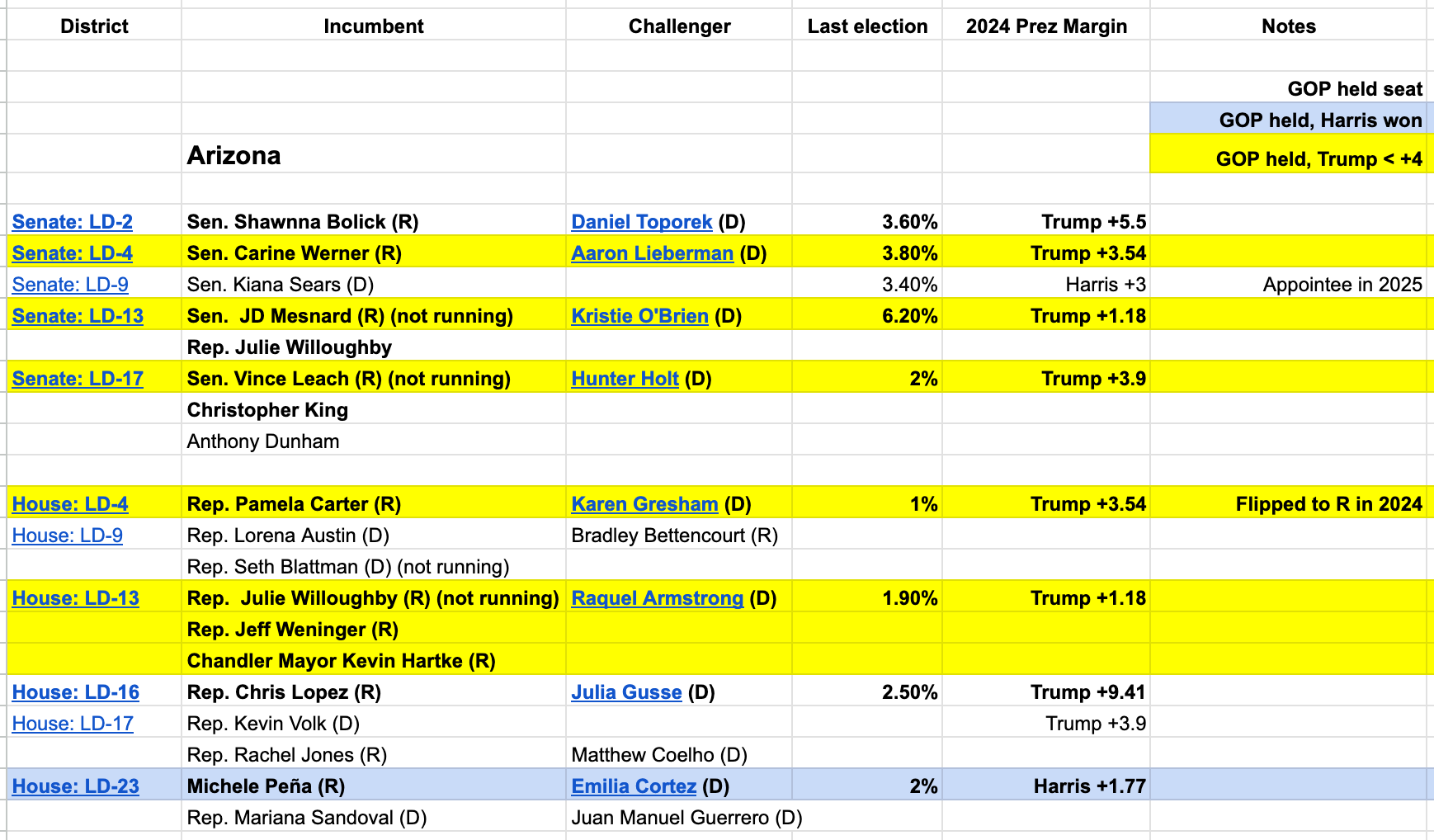
Arizona:
Democrats need to flip three seats in the state Senate and four seats in the state House. Re-election for Gov. Katie Hobbs would give them their first Arizona trifecta in… ever, I believe. I’ve identified four very flippable seats on the Senate side (more could fall in a wave year) and five on the House side, so it’ll be tight, but possible.
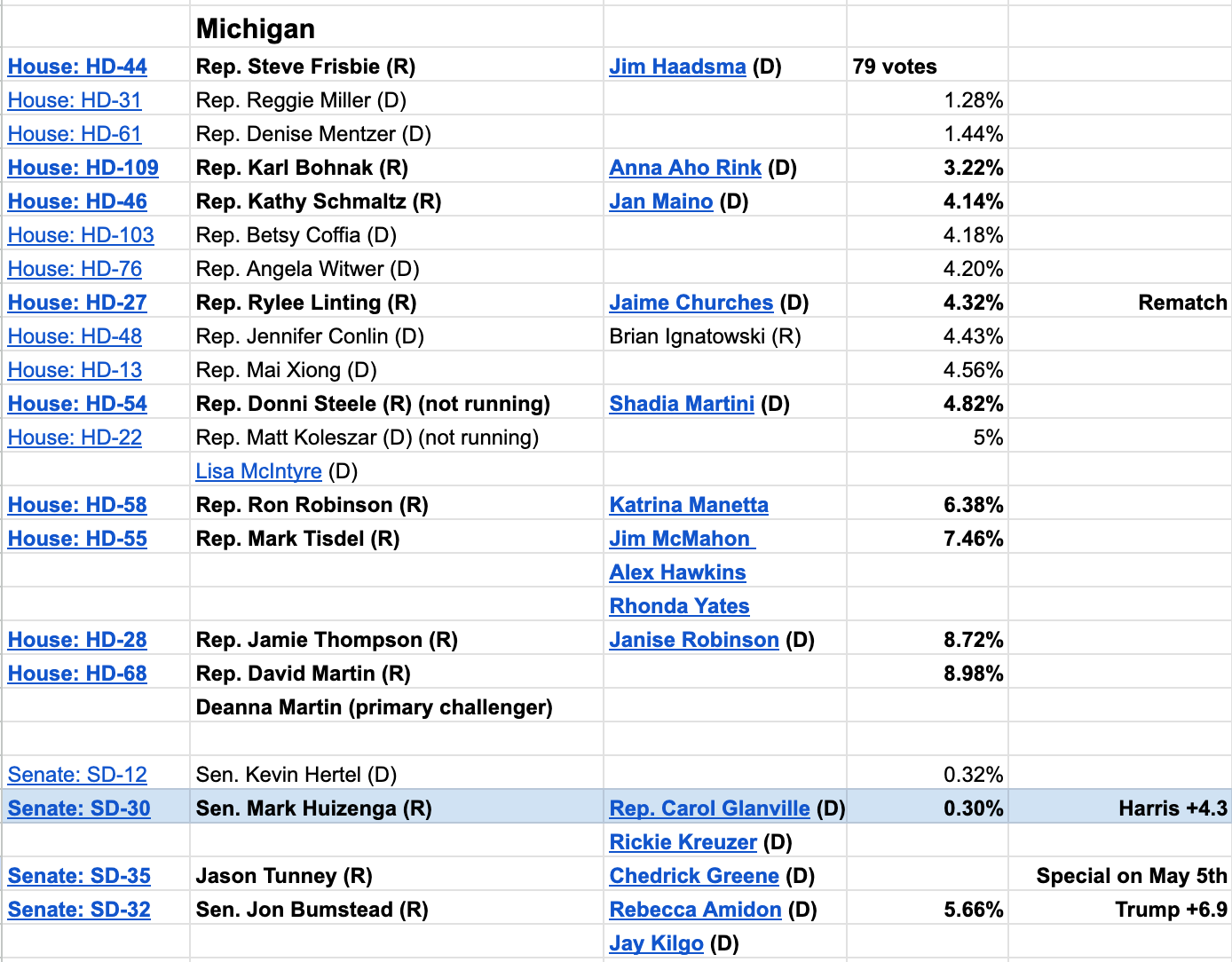
Michigan:
Democrats hold a one-seat majority in the state Senate and need to flip four seats to win back the state House. An open governor’s race will likely help dictate the outcome here.
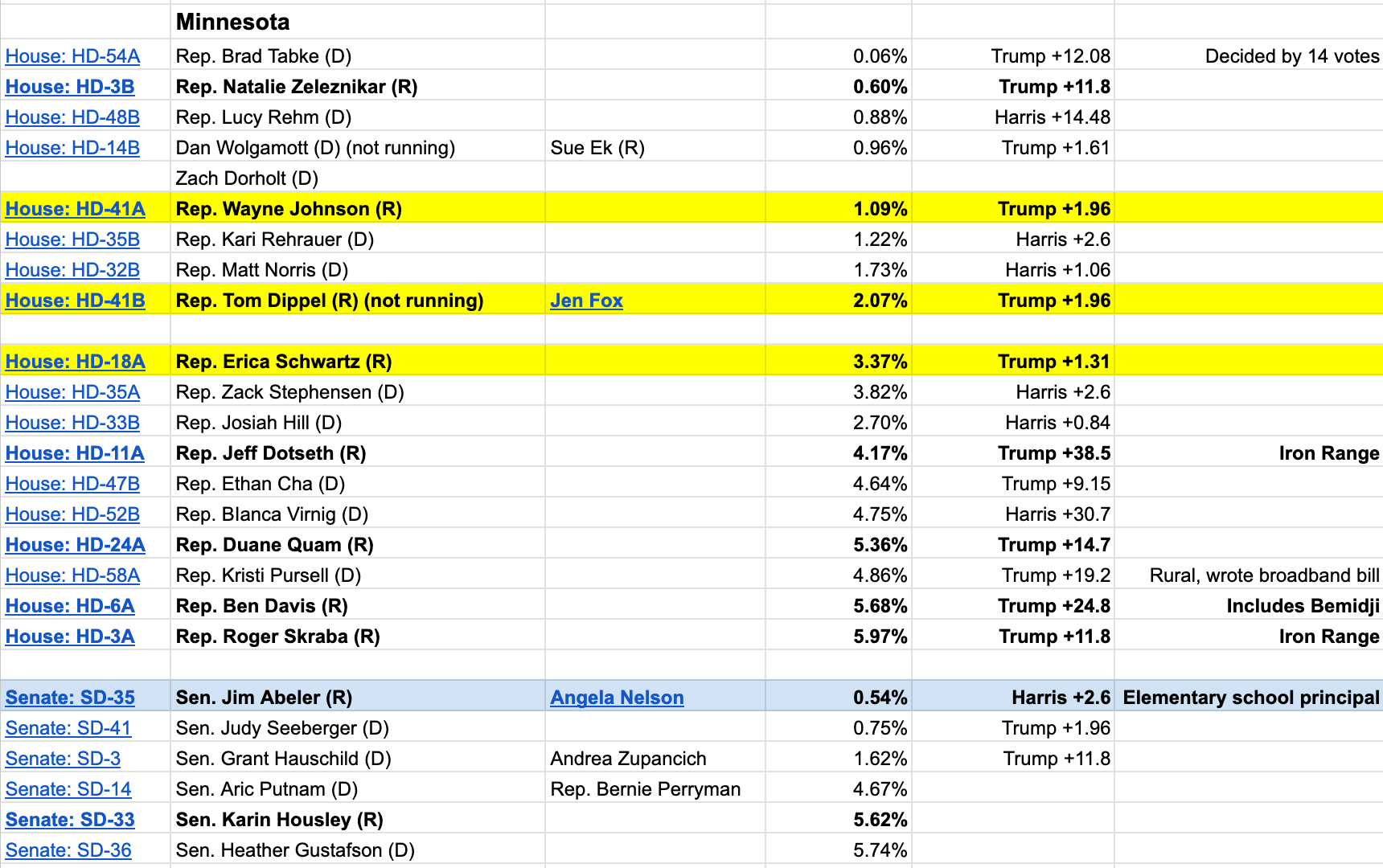
Minnesota:
It doesn’t get closer than this, as Democrats hold a one-seat majority in the state Senate and the House is tied, with both parties in a power-sharing agreement.
The GOP brand will be in the absolute toilet after the Trump administration’s invasion of the Twin Cities, and Gov. Tim Walz’s stepping aside will take away a big Republican target. But Democrats won a handful of very close races in 2024, so the challenge won’t just be flipping seats, but holding on to them, especially in the Iron Range, a historic blue territory that has become very Trumpy at the national level.
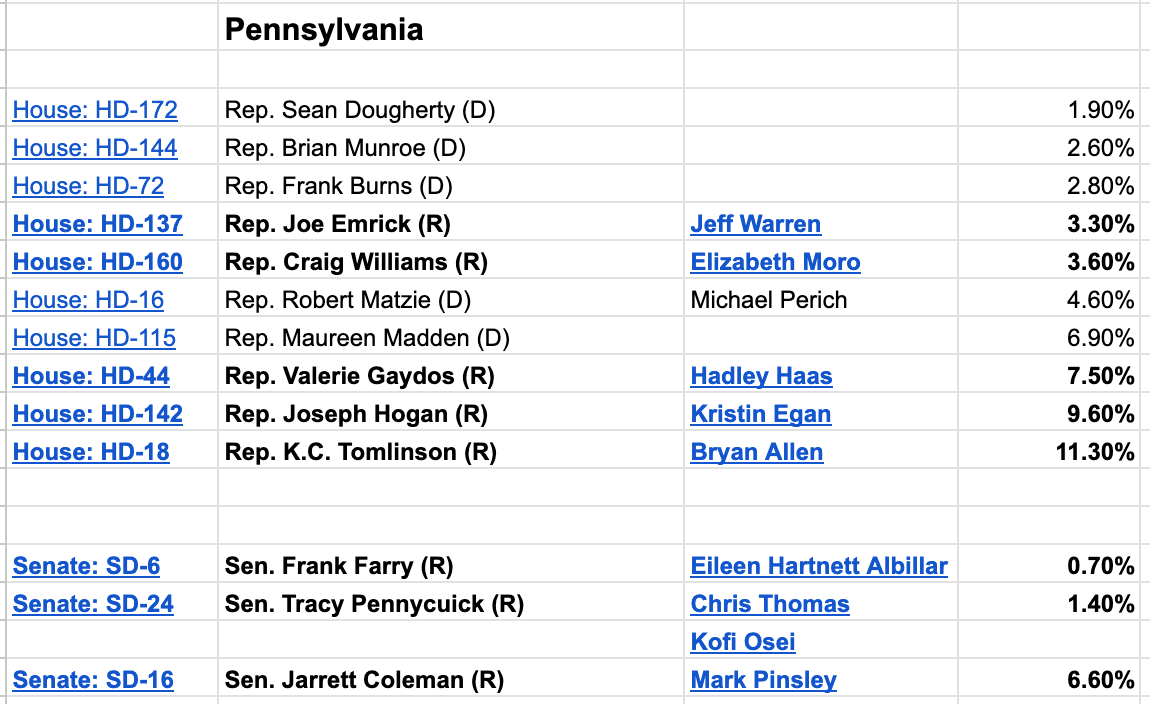
Pennsylvania:
Gov. Josh Shapiro is likely cruising to re-election, but the more progressive elements of his agenda have — ostensibly — been halted by the Democrats’ ultra-narrow majority in the House and the GOP’s hold on the state Senate.
There are two special House elections in GOP-leaning districts next week, as well as one in mid-May; should Republicans retains those districts, the Dem lead will be back down to one. On the Senate side, Democrats have to flip two more seats to even things up.
Wisconsin:
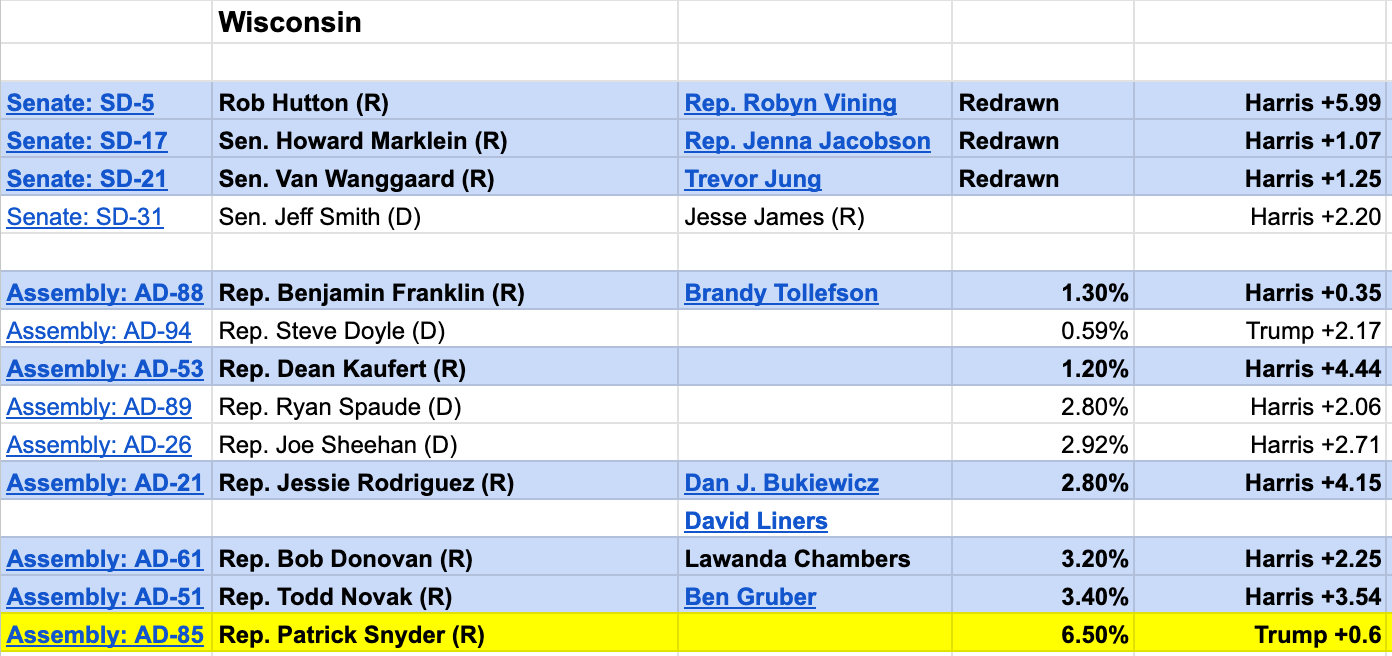
Flipping the Supreme Court allowed former Gov. Scott Walker’s pernicious gerrymander to finally be overturned, which led to an exodus by many Republicans terrified of competitive elections. That includes longtime speaker Robin Vos, whose seat will be a reach but not out of the question. Democrats need two seats in the state Senate and five in the House, which will be tough but not out of the question, pending the gubernatorial election.
North Carolina and Kansas (supermajorities to break)
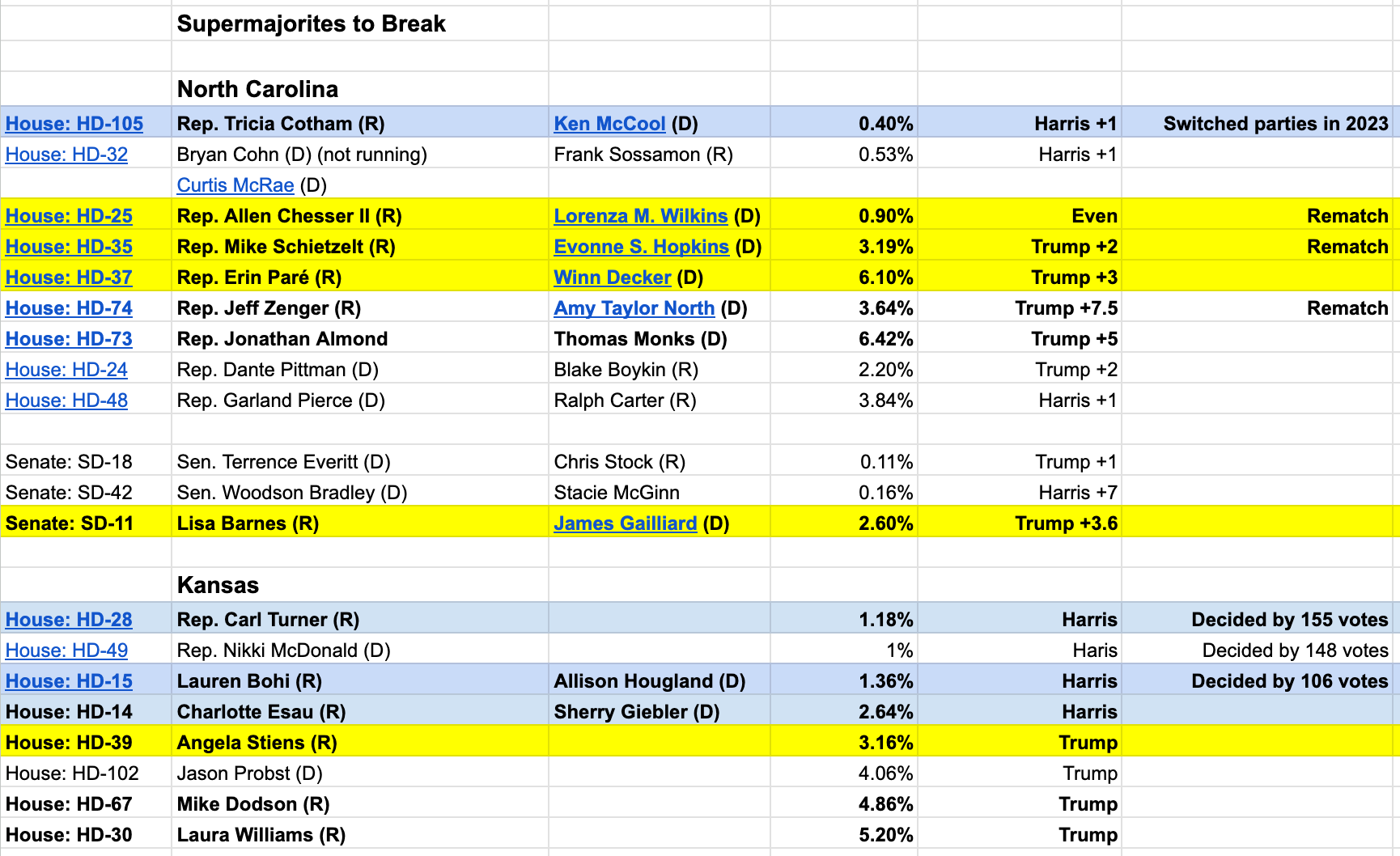
Republicans have been able to consistently override NC Democratic Gov. Josh Stein’s vetoes over the last year, not because they have supermajorities, but because a few terrible Democrats consistently defected on those votes. Democratic primary voters took care of that issue, to some degree, by tossing three of those incumbents out of office. But this fall offers a chance to get on firmer ground, with a number of close seats that could turn blue in a wave year.
A quick note
This is a living list that will only fill out and grow with time. Different state filing deadlines and primary dates mean that some districts have decided nominees, while others do not yet have officially declared candidates. In some states, the 2024 presidential election margins by district are readily available; in others, the information is almost impossible to track down.
Ideally, this list will grow as the GOP crumbles and more seats come into play, but that will require a lot of work from people on the ground. As the year goes on, I’ll be highlighting candidates from this list as well as local organizations doing the hard work to expand the map and get progressives elected. Please feel free to append notes or email me adjustments, updates, or even corrections; I’ve fact-checked this thing a whole bunch, but alas, I am not flawless.
There will be more states added, too, because if you’re not expanding the map, you’re letting it shrink. So keep this spreadsheet bookmarked — I will likely get a separate, simple URL for it at some point — and use it as you see fit.
More to come…
Wait, Before You Leave!
Progress Report has raised over $7 million dollars given directly for progressive candidates and causes, breaks national stories about corrupt politicians, and delivers incisive analysis, and goes deep into the grassroots.
A paid subscription allows us to continue this work and provides readers with knowledge and analysis they won’t get anywhere else. You’ll know what’s happening at the state and local level, have insight into the big laws and grassroots movements are coming down the pike before they become national stories, enjoy 1-on-1 conversations with the leaders of tomorrow, and play a roll in rebuilding a progressive media infrastructure. Most importantly, you’ll be able to make a difference in the races that really matter, even if few people follow them.
You can also make a one-time donation to Progress Report’s GoFundMe campaign!
I will reach out to a few folks I know in those states to let them know that Progress Report is a great source of information and insight. Thank you