

Welcome to a Thursday night edition of Progress Report.
When the Supreme Court announced yesterday that states could be blatantly racist again, it set off a right-wing stampede that made January 6th look like a luncheon. Lawmakers in states across the South immediately began talking about and even passing outrageous gerrymanders designed to silence minority voters and net Republicans more Congressional seats.
Tonight’s newsletter is about how we got here, what comes next, and how we might be able to mitigate the damage.
Note: The far-right’s fascist takeover of this country is being aided by the media’s total capitulation to Trump’s extortion. It’s never been more critical to have a bold independent media willing to speak up against the powerful. That’s what I’m trying to do here at Progress Report.
You can help keep Progress Report afloat and build that network for just $5 a month — every subscription helps!
Thank you to our latest crowd-funding donors: Sarah, Peggy, Nina, and Eileen!


Samuel Alito wrote the opinion in Callais v. Louisiana that finally gutted what remained of the Voting Rights Act, but nobody has more blood on their hands than Chief Justice John Roberts.
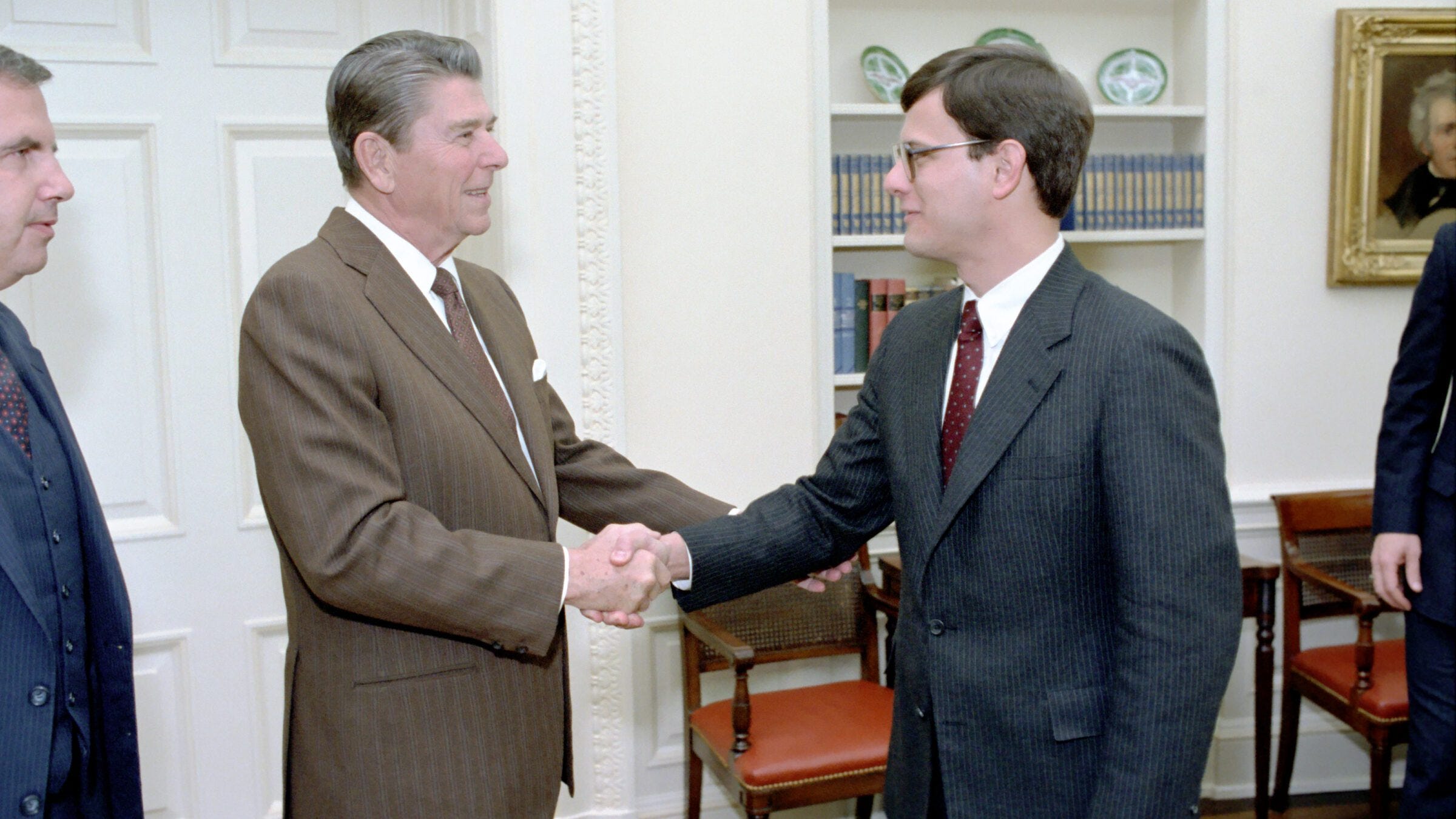
Foiled in his attempts to kill the landmark civil rights law in the early 1980s, when he was an attorney in the Reagan Department of Justice, Roberts spent the next 44 years methodically working to return the nation back to the Jim Crow era. Roberts’s story is the story of the modern conservative legal movement, an extremist sect that worked its way to the pinnacle of power with the help of deep-pocketed benefactors whose money has warped American culture and launched a new civil war.
Roberts’s patience helped fool the media and many Democrats into believing that he’s some sort of moderate, but investigative reporters and legal experts like David Daley had him clocked from the start. Daley is the author of the book Antidemocratic, published last year, which chronicles Roberts’s rise and ideological crusade, and I spoke with him after the Callais ruling to understand how the hell we got here, what comes next, and how we might be able to fight our way out.
Progress Report: In Justice Roberts’ decision in Shelby County v. Holder, which ended the pre-clearance requirement, he cited the fact that Section 2 still exists and can take care of racial discrimination in redistricting. Yesterday, Roberts voted to torpedo Section 2. So what happened? What changed? I’m going to ask that a lot, but this is the starting point.
David Daley: I think Roberts has played a really careful long game over decades to arrive at the point we reached yesterday, which was essentially the final evisceration of the Voting Rights Act.
This has been his life’s work. In many ways, the fact that he has so painstakingly taken apart the most successful civil rights legislation in American history, while maintaining his reputation as a mildly conservative institutionalist — an umpire — is a testament to the skill and patience he has shown.
This decision echoes, in many ways, the first voting rights fight he was part of as a young man in Washington. When he arrived at the Reagan Department of Justice and took the reins of the voting rights portfolio just ahead of the 1982 reauthorization fight, the question of intent versus effect was at the very heart of it.
Roberts’ side lost that fight in 1982 in Congress. Congress made clear they meant effect, not only intent. But yesterday, Roberts, Alito, and Thomas had the last word.
When you look at this case by case, each of these cases over the last decade-plus has been a previous case that provided breadcrumbs for the next bigger decision.
When you go back and look at Shelby County, there was a case about three years earlier called Northwest Austin. That’s the precursor to Shelby. That’s where Roberts drops, in dicta, this idea of “equal sovereignty among states.”
[Note: Equal sovereignty refers to the idea that the federal government must treat every state the same, which directly conflicted with the Voting Rights Act’s requirement that some states with a history of racial segregation and voter suppression run changes to their voting laws and redistricting maps by the Department of Justice before implementation.]
There is no such idea. Even conservative law professors looked at this and said, “I’ve never heard of this,” because it doesn’t exist. But Roberts made it up by extrapolating from the Equal Footing Doctrine, which governs the admission of states to the Union. He turned it into “equal sovereignty,” dropped it into Northwest Austin, and then cited himself a few years later in Shelby County.
So he is always planning ahead and strategizing the next move. While he promises in Shelby County that freezing the Section 4 formula would not have a major effect — and that things have changed in the South anyway — the Court gets to work undermining that almost immediately.
The road to Brnovich, where Section 2 was supposedly preserved but is [actually] weakened, is a short one. Step by step, you can see how they got there.
They quote from what I think is one of the most disastrous decisions this Court has handed down this century: Rucho v. Common Cause on partisan gerrymandering. Roberts, in that case, while incentivizing all kinds of gerrymandering — the mid-decade Armageddon we’re watching now — goes out of his way to say, “I am not at all leaving completely partisan gerrymandering to echo into a void. But there’s other ways of doing this, and citizens and commissions have it under control, and it’s not for the federal courts to get involved with.”
And of course, as soon as he says this, states say, “Well, we can partisan gerrymander now without anybody getting in our way, without any threat of punishment.”
And the consequence of that was that states began doing racial gerrymanders and saying, “This isn’t a racial gerrymander. This is a partisan gerrymander.”
And yesterday, in the Calais decision, the Court actually says, “Well, one of the issues here is that we have to protect the ability of states to do partisan gerrymanders.” Because when states say they’re doing a partisan gerrymander and someone says “no, that’s racial,” that gets in the way of their ability to partisan gerrymander.
To believe that this Court does not fully understand, and indeed strategize, what the consequences and the partisan ramifications of their decisions in these cases will be is at this point to be willfully blind to the facts.
Go back to three years ago to Allen v. Milligan, in 2023, when the Supreme Court, in a majority that included John Roberts, upheld Section 2 in pretty much the same situation. What changed? Does this shift suggest they were strategizing, moving gradually with their decisions over the years?
David Daley: Kavanaugh’s concurrence in that case is the breadcrumb.
They all sign onto a decision saying this is the Voting Rights Act and what we have to do. But then Kavanaugh writes a brief concurrence saying, “I concur because this is the law right now. But what nobody is saying is, should this still be the law? Maybe time’s up.”
Louisiana noticed that concurrence, as Kavanaugh intended. He laid a trail toward the decision the Court wanted to reach. They didn’t feel they could do it in Milligan, but they set up what happened in Callais.
The Constitution hasn’t changed, the circumstances haven’t changed—they just decide now’s the time.
David Daley: That’s right. This Court is not a court. In the words of my friend, Professor Eric Segall: this Court is not doing law, it is exercising political power.
John Roberts is less the Chief Justice than the most effective, brilliant, and ruthless Republican political actor of the last half century. He has delivered victories the Republican Party could never win at the ballot box — on voting rights, the regulatory state, gun control, reproductive rights, executive power.
Look at where the nation and Constitution stand now compared to 2005. He has moved both dramatically rightward, all while insisting he’s just umpiring a baseball game.
Democrats famously failed to pass critical voting rights protections when they had the trifecta in 2021 and 2022. It drove me nuts. But now I’m wondering whether it would have mattered, given how the Supreme Court just ignored existing law and invented new interpretations in this decision.
I don’t think it would have mattered. I mean, look at what the Court just did in Callais, right? Congress did pass a law, and Justice Alito scribbled all over it and rewrote it to what he wanted it to be, all the while saying, if Congress wants to do something else, they should do so.
In 2006, when the Voting Rights Act was reauthorized, it came with a 16,000-page report, intentionally assembled by the bill’s sponsors to be a paper trail for any legal challenges. And the goal was to document the thousands upon thousands of cases in which the pre-clearance nationwide had been necessary, remained very much necessary in the nation in the years even leading up to its 2006 reauthorization.
It includes stories of a canceled election in Mississippi when it looked like the first Black candidate was ever likely to win — shocking stuff for 21st-century America. And this paper trail gets cited by all of the lower courts at Shelby County, at Northwest Austin, all the way up. And they were convincing to all of the lower courts — not to John Roberts.
That Congress had clearly and plainly said what it intended the law to be and laid out current circumstances that absolutely justified it, and Roberts ignored it. So the idea that Congress could simply fix this and that John Roberts and Samuel Alito would smile and nod and say, “Okay, this time” … they see themselves as a super-legislature, not as a court.
Already, southern states are moving to delay their primaries so they can draw some racist gerrymanders, even in states where the primary elections have already begun. If it gets to the Supreme Court, do you imagine the justices will stop them based on precedent, or is the mask fully off at this point?
David Daley: I thought originally that this decision would come down in January or February so that all of these states would have time to act ahead of the midterms. And then as it slowed down, I wondered if maybe Roberts was more comfortable with this decision coming out in June, once it was too late for this midterm.
It almost felt like a classic Roberts move to detonate a time bomb that we wouldn’t feel the consequences of for another two years, that might allow him to dust his own and the Court’s fingerprints off of this a little bit.
But this race across the South to redistrict this year, even to the extent of canceling primaries that are already underway, certainly underlines the very partisan nature of what the Court has done and underlines just how fanciful its arguments remain about things having changed in the South.
It’s the same thing we saw after Shelby County, right? Texas was ready and enacted its voter ID law that very afternoon. North Carolina was working in 2013 on two different bills — one that they would introduce that was milder if they had upheld the Voting Rights Act, and another that they called the monster that they would unleash if Shelby went the way they wanted. They went with the monster.
Roberts presumably gets the newspaper. He would have understood what was happening in all of these states. And if he truly believed that things had changed in the South, he might have looked at what was happening in state legislatures and said, “Maybe things haven’t changed as much as I thought.”
And if he didn’t think that in the days leading up to issuing the decision, the rush of legislation immediately afterwards might have pointed this out. It didn’t. And here they are, spouting the same lines 13 years later. It’s as if this is their intention.
And now that the deed is done, it’s hard to imagine them blocking any gerrymandered.
Daley: I imagine that by April it would be too late, but one should never underestimate the determination of red state trifecta governments to work to dilute and suppress the voice of minorities and their political power.
And it’s a matter of whether the Supreme Court has the willingness to say, “Hold on for a second,” which I think—anyone at this point who thinks the Court is going to side with voters over the interests of white Republicans is sadly mistaken.
So it seems like the only way to remedy this situation and get a new Voting Rights Act passed without it getting struck down is to expand the Supreme Court?
David Daley: I think the Court certainly has to be expanded. It certainly has to be reformed. We have to talk about term limits, ethics guidelines, whether it should be allowable for justices to time their retirements so that they can be replaced by a president of their own choosing.
I think there are bigger questions we have to look at as well. Are there questions over the kinds of cases that they can have jurisdiction over? At this point, I’m not above stripping them of their grand temple to justice and making them work out of an office mall in Silver Spring to remind them that they’re a court and not a super-legislature that has final say.
So I think that there are lots and lots of reform ideas here, and that until and unless we get serious about this — and it’s going to have to be the Democratic Party that gets really serious about it at the next trifecta moment that they might have — because if they don’t, this Court is going to continue to claim the final say until the 2050s. The supermajority is going to be in power.
So Democrats who think that things will go back to normal once Trump leaves don’t understand that it’s the U.S. Supreme Court that has really become the main source of Republican political power in the nation.
On the topic of Democrats getting the message, a few years ago, they did essentially nothing to pursue all the revelations about the conservative justices’ blatantly corrupt relationships with right-wing billionaires.
Democrats didn’t have the votes to oust a justice, but I argued at the time that making a big show of it and issuing subpoenas and getting behind the idea of expanding the Supreme Court could have possibly chastened those justices, maybe stop them from being so bold in their decisions. Do you think that would have made a difference? Or was I just delusional?
David Daley: I don’t know the answer to that. But I do think, in many ways, that the lesson of President Roosevelt and his serious threat of court-packing in the 1930s put the Court on notice that it had gotten far outside the mainstream of where America would like it to be.
And I’m not sure John Roberts cares. I start my new book with a quote from Roberts in 2009. Let me read it: “The most important thing for the public to understand is that we’re not a political branch of government. They do not elect us. If they do not like what we are doing, it’s more or less just too bad.”
That’s actually not how it works. And I think some serious threats, and then action to reform this Court, to bring it back in line, to reduce its chutzpah, are very much called for and required in this moment.
To me, this is the bigger project of the conservative legal movement. It’s the inversion of laws intended to protect minorities, the same way the right attacks DEI as being racist and the separation of church and state as the persecution of Christians.
Daley: I think you’re right. I think it’s all the same. I think it’s all the same playbook, and I think a lot of this comes from the same impulse.
You can look at one of the very first major decisions Roberts handed down. This was the school desegregation cases — I think it was Seattle and Louisville, Kentucky. And the most famous line from that decision is when Roberts says, and I paraphrase, but I’m close, “The way to stop discriminating based on race is to stop discriminating based on race.”
I lived in Louisville, Kentucky for a few years, and Louisville is one of the most segregated cities in the nation. They attempted to do a couple of little things to make themselves slightly more equitable. Even that was a bridge too far for the Chief Justice.
You look at a case like Shelby County. The Shelby County case was brought by Edward Blum, who is the same person who brought the university affirmative action cases. So there’s a similar legal principle they’re trying to advance — race neutrality and colorblindness.
And this tracks all the way back into the 19th century. This was very much the way that those who were conservatives in the 1970s looked at the civil rights movement. You see it every year on Martin Luther King Day when they pull out the one King quote that they know about colorblindness.
There is, among this conservative legal world, a desire to say: how long do we have to keep giving special treatment? There’s an impatience with racial progress and a determination to declare the job finished and complete.
And you see this in Shelby County, in which Alito and Roberts are asking how long this is going to go on. It’s beginning to look like this is going to go on forever. Well, Congress said 25 more years, and then they’ll revisit it. And they’re the ones who get to make that decision, especially if you’ve read the text of the 14th Amendment.
It’s a direct echo of the Court decisions in the 1870s that effectively smothered Reconstruction. You see all of these cases — the Civil Rights Act cases, the Enforcement Act cases, United States v. Cruikshank — in which the justices essentially say, “It’s been 15 years since the Civil War. Is this kind of treatment going to go on forever?”
Meanwhile, there are still Americans bearing the effects of slavery. But these white justices were already trying to figure out how quickly they could turn the page and move on. And here we are today, and this Court is doing the exact same thing.
Wait, Before You Leave!
Progress Report has raised over $7 million dollars for progressive candidates and causes, breaks national stories about corrupt politicians, and delivers incisive analysis, and goes deep into the grassroots.
None of the money we’ve raised for candidates and causes goes to producing this newsletter or all of the related projects we put out. In fact, it costs me money to do this. So, I need your help.
For just $5 a month, you can buy a premium subscription that includes:
Premium member-only newsletters with original reporting
Financing new projects and paying new reporters
Access to upcoming chats and live notes
You can also make a one-time donation to Progress Report’s GoFundMe campaign!
Also we need to work on imposing term limits to SCOTUS.
Thanks for this discussion. I’m afraid if we don’t go far enough we will not discover how deep or broad the problem is. We can all believe or hope that people’s prejudices and discrimination will abate. But law exists because limits have to be set on people’s actual behavior, not just our expectation of decency. This is where libertarianism has failed us. It certainly failed the Republican Party. The notion that you have to have the minutes to a KKK rally planning meeting to prove the existence of their racist intentions is laughable. You don’t need to have such proofs to have standards, strong expectations and enforcement.