

Welcome to a Tuesday edition of Progress Report.
My wife and I returned to New York last night after two weeks in Cleveland, where I underwent my third open-heart surgery in three years and seventh overall.
One of the (more minor) inconveniences created by this ongoing cardiac saga has been the way I’ve been forced to write about it, because I’m not talented enough to whip up anything that would be more visceral than just repeatedly stating the raw number of times they’ve buzz-sawed open my chest. The Cleveland Clinic is one of the few places in the world that would try this, let alone pull it off. Try to look up data about people who have undergone seven sternotomies and you’ll only find anecdotal stories from local papers, subjects always regarded as medical marvels.
I don’t need to be the subject of any feel-good stories, but there’s probably some kind of medical journal paper to be written about the course of events and the ingenuity of the medical team that has saved my life twice over the past nine months. I was talking about my son while up on the operating table, as if telling the doctors about the four-year-old back home would motivate the doctors to be even more careful during the operation. One of the anesthesiologists promised that I’d be going back home to him, and now here I am, sitting on the couch surrounded by Shea’s Godzilla toys, my vocabulary again too limited to express the depths of my gratitude to my doctors and my wife for getting me through this.
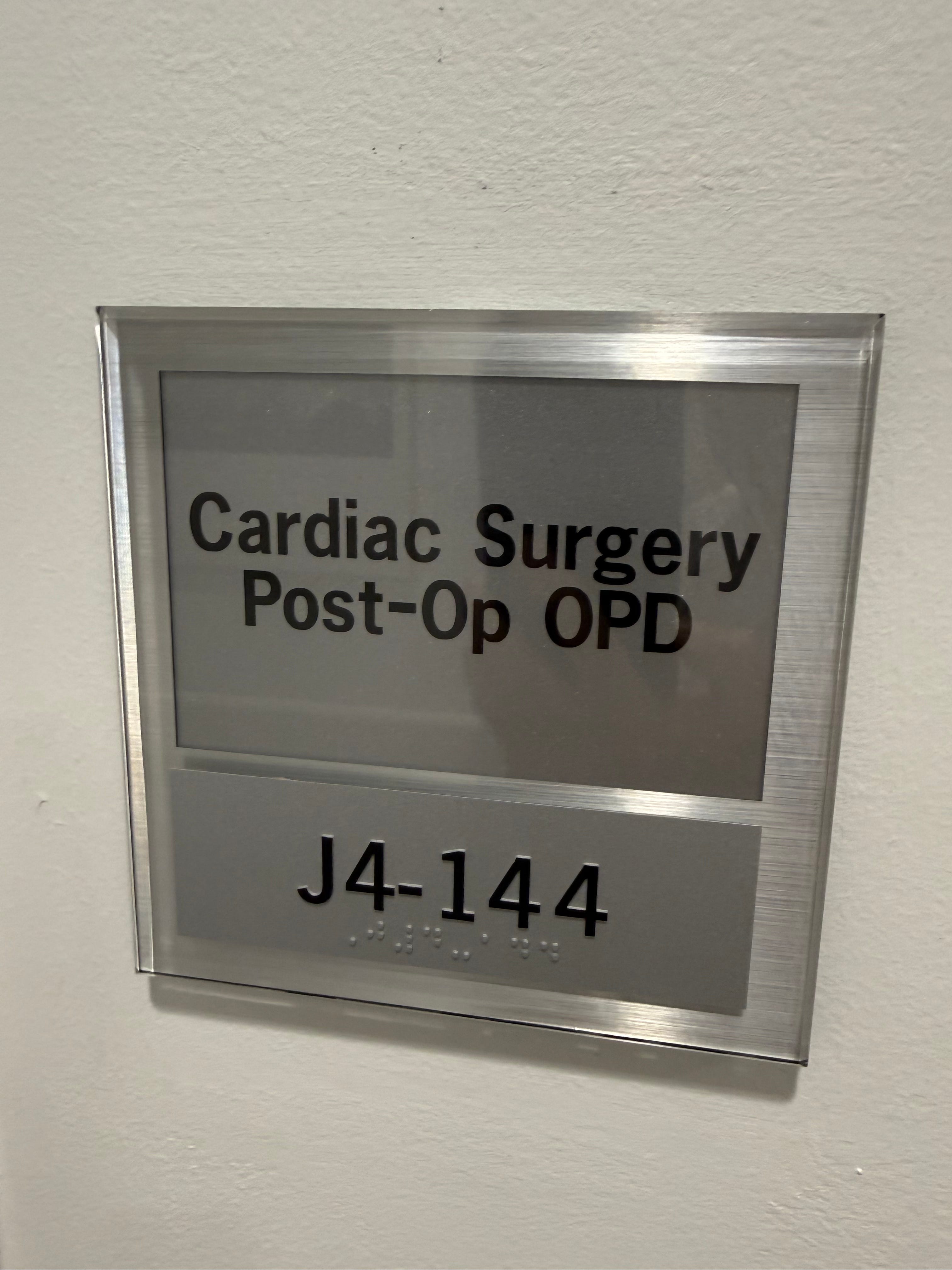
Here’s another way of understanding the complexity of the operation: my surgeon spent half of the eight-hour runtime carefully working through the scar tissue and adhesions that surrounded my heart as biological responses to the previous operations. Maybe it’s not the best metaphor — my literary shortcomings are a theme here — but the whole process is like re-fighting every previous war to simply get to the battlefield, which in this case involved removing a pseudoaneurysm, replacing the mitral valve, and fixing the tricuspid valve. I now have two mechanical valves, so it sounds like a metronomic tap dance in my head at all times.
So what now? Right now I feel like I was hit by a truck, with bad headaches and pains in places I forgot even existed, so it’ll take a fair amount of physical therapy to even get me to where I was before this whole saga started back in 2023. This also has to be the end of the saga: to paraphrase Dr. Shinya Unai, who is more like a wizard than doctor, it’s really important that I avoid needing an eighth surgery anytime soon.
Unfortunately, there’s no guaranteed way to do that, but keeping my heart rate and blood pressure down are non-negotiable. As a friend of mine said to me, all I have to do is never read the news again. Should be fine.
So, long story short, I need to chill, a sentence that feels incompatible with my personality. For example, I spent some time in the hospital collecting some thoughts about the US healthcare system, my own situation, and a few elections, so I’ve included those below.
Thank you to our latest crowd-funding donors: Mike, Elizabeth, Jennifer, James ,and John!


Hidden costs in a broken system: There were a lot of people staying in the cardiac step-down units, but they weren’t all patients.
Visiting hours end at about 10 pm in the ICU, at which point friends and family are shooed away so patients can take their medications and try to get some sleep. There’s no closing time in step down, but that’s not so much to facilitate late night visits than it is to allow patients’ families to stay around the clock. In some cases, they were there to help provide care when the nurses were busy, but I think a lot of the time, family members were bunking in with their sick loved one because it was too expensive to stay anywhere else.
Medical travel, as they call it, is often an afterthought; when you hear that a spouse or parent needs open-heart surgery, sleeping arrangements usually aren’t the first thing that spring to mind. But if you’re traveling out of town or have a long hospital stay on the horizon, the concern is real and the options are often sparse and/or expensive.
A few years ago, the American Cancer Society estimated that lodging alone for a six week chemo course could run upwards of $17,000, and it’s much more expensive in dense cities and in-demand treatment programs. There are some nonprofits that provide a modicum of housing for particular populations — the Ronald McDonald House famously offers shelter in pediatric cases, and the ACS has a network of “Hope Lodges” for cancer patients — and some major hospitals own facilities that patients can access at a discounted rate. The University of Texas’s MD Anderson Cancer Center has a hotel called the Rotary House, with standard rooms running around $175 and suites that are around double that.

More often, it’s a sort of private-public partnership with a discount. The Cleveland Clinic has three small privately-run hotels on the massive campus, which offer discounts based on expected length of stay.
The bill for our two-week stay came to over $3700, and it would have been substantially higher had we needed to park a car or eaten more than a few meals at the hotel restaurant. I’m lucky that my surgery was covered by insurance, but the hotel — plus flights, food, etc. — all came out of pocket. As much as my hand shook when I signed the bill, were were able to handle the load, but there are only so many rooms and a lot of patients’ families had to get creative.
The hospital room comes with a bed, a reclining chair, and a wall-fastened wooden futon that unfolds into a table-like bed in the middle of the room. You’d see people carrying around cold cuts to make sandwiches, groceries transported in wheelchairs, and other signs of long-term occupation. This isn’t the hospital’s fault; staff there actually treat families really well during the surgery and subsequent stay, accommodating really anything you can imagine.
Still, charity cases and generous occupation rules are not going to solve this problem, which is hardly limited to lodging. People miss work, too, compounding the financial precarity that these situations can suddenly create. There are 22 states that have passed their own versions of the Family and Medical Leave Act that provides for some weekly stipend, determined by a complicated formula pegged to the person’s income. The most generous are in New Hampshire and Vermont, which cap out at $2,128 per week, while most other states keep it in between $1200 and $1600.
Democrats have been running on trying to institute FMLA provisions in other states and nationwide, and I think they’d get a lot more buzz for the proposal if they actually explained what they did. It should be at the top of the list of 2028 policies; even moderates like Virginia Gov. Abigal Spanberger have signed them into law, which makes the FMLA a rare shared goal in a time of Democratic civil war.

Real quick: Today is finally primary day in Massachusetts, which could experience the most significant revamp of its Congressional delegation in quite some time. I interviewed two of the leading progressives running for the House this term, and I’ve included the interviews below:
Patrick Roath, a former aide to Barack Obama and Mass Gov. Deval Patrick, is challenging long-time Rep. Stephen Lynch in the 8th district. He’s running against corporate money and hoping to bounce the conservative Democrat, who has represented parts of Boston since 2001.
And state Rep. Tram Nguyen is currently leading an open race to replace Rep. Seth Moulton in the state’s sixth district. Moulton is running for Senate against incumbent Sen. Ed Markey and may be the only younger candidate I definitively want to see lose this cycle.
Wait, Before You Leave!
Progress Report has raised over $7 million dollars for progressive candidates and causes, breaks national stories about corrupt politicians, and delivers incisive analysis, and goes deep into the grassroots.
None of the money we’ve raised for candidates and causes goes to producing this newsletter or all of the related projects we put out. In fact, it costs me money to do this. So, I need your help.
For just $5 a month, you can buy a premium subscription that includes:
Premium member-only newsletters with original reporting
Financing new projects and paying new reporters
Access to upcoming chats and live notes
You can also make a one-time donation to Progress Report’s GoFundMe campaign!
So glad for you that you are home. Take it easy and let your body and mind recover. Take a break. We will be here whenever you publish.
Great news Jordan. Try not to let all the insanity, as you said, raise your blood pressure. I'm seriously glad you believe in Ed Markey. Some of us old farts are far more progressive and focussed on the people than the inexperienced younguns. I hope the people tell Moulton to take a hike on a short pier.