

Welcome to a Friday evening edition of Progress Report.
A sick toddler and a miserable time in the dentist’s chair threw me for a loop and delayed publishing this week. But now I’m back, and tonight I’ve a new feature on the battle over voting rights and direct democracy going down in the heartland.
Happy Halloween!
Note: The far-right’s fascist takeover of this country is being aided by the media’s total capitulation to Trump’s extortion. It’s never been more critical to have a bold independent media willing to speak up against the powerful. That’s what I’m trying to do here at Progress Report.
In honor of Halloween, I’m offering 40% off a paid subscription, so you can help keep Progress Report afloat for just $3.00 a month — every subscription really, really matters!


In August, Donald Trump began leaning on Missouri Republicans to further gerrymander the state’s Congressional map. Within days, progressive groups called emergency meetings across the state to gauge interest in fighting back.
Convened by Jobs with Justice and the Missouri Workers Center in five different regions across the state, the town halls drew thousands of irate voters. They packed union halls and rallied around the state capital, feeling a familiar outrage at yet another Republican effort to subvert democracy and cancel their votes.
“I think voters are rightfully frustrated that politicians don’t listen to them,” says Richard von Glahn, executive director for People Not Politicians Missouri. “It’s a constant tussle between what the people of this state want and what the politicians of this state want.”
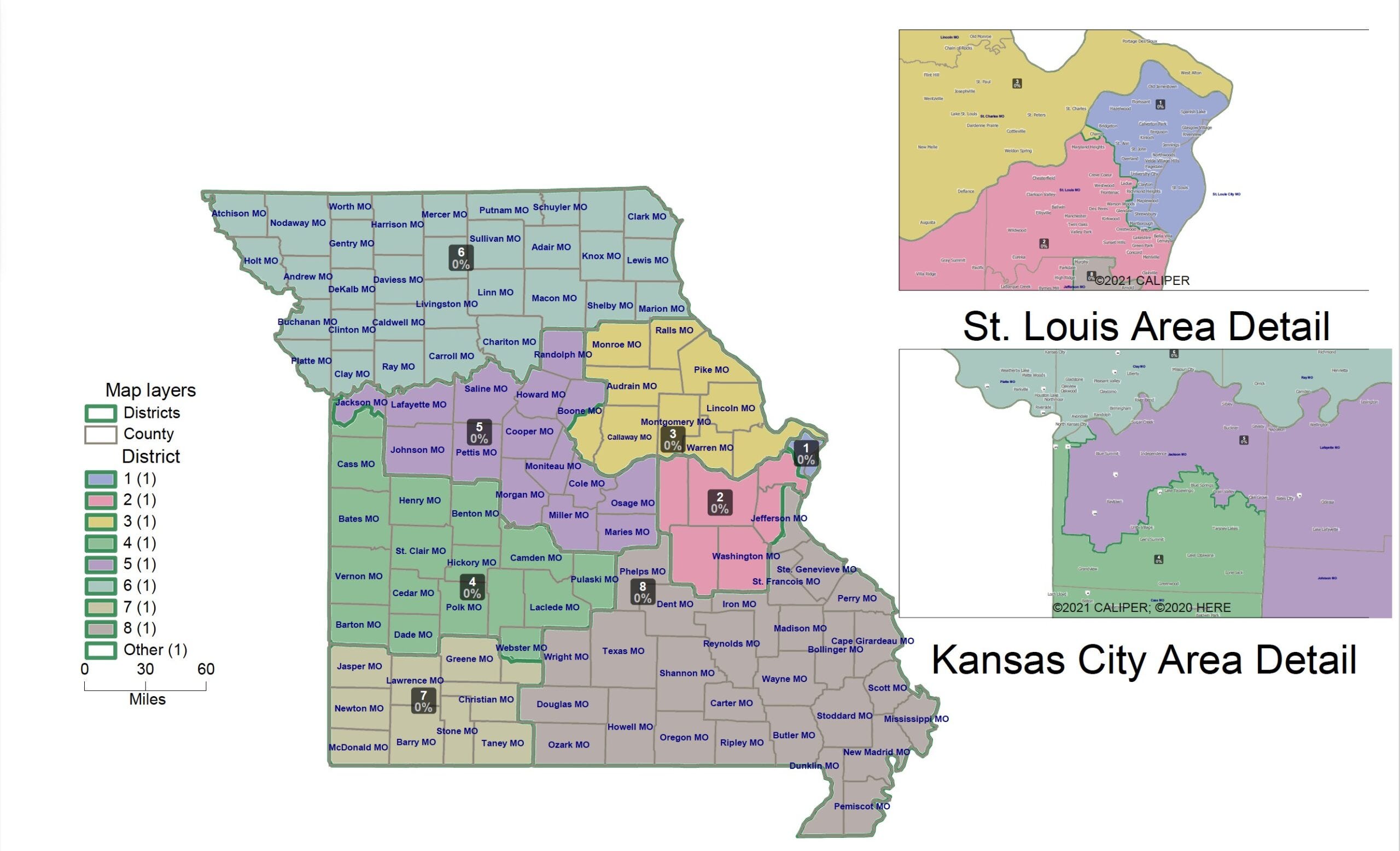
Nobody really expected the backlash to dissuade lawmakers from gerrymandering, and by mid-September, they passed a map designed to give Republicans control of seven of Missouri’s eight Congressional seats. Where the summer meetings proved valuable was in giving the organizers a heads tart on mounting a meaningful opposition.
Democratic groups are depressingly proficient at drawing up lawsuits against gerrymandered maps, and in Missouri, the National Democratic Redistricting Committee quickly challenged the legality of a mid-decade redistricting. They’ve also questioned the source of the map, which likely emanated from the White House, not Gov. Mike Kehoe’s office. But relying on the judiciary to uphold democracy isn’t a particularly good bet, so grassroots organizations also opted to pursue a more forceful path outside of the courts.
Missouri’s robust ballot referendum system provides citizens the opportunity to directly challenge a new law passed by the legislature. Should they collect the requisite petition signatures, implementation of the new map will be suspended and put to an up-or-down vote on the November 2026 ballot.
Getting to that point would ensure that Rep. Emanuel Cleaver’s Kansas City-area district remains intact for at least one more cycle, whether or not he runs for re-election. Should the new map stay intact, some of his current constituents will be stuck voting in the same district as folks in rural Osage County, a four-hour drive.
There have been 27 “people’s veto” referendums in Missouri history, all but two of which have been successful. The tactic was last utilized when voters overturned an anti-union “right to work” law in 2018.
Missouri law requires the referendum’s sponsor to collect 106,000 signatures in just 90 days, which is all the more daunting because People Not Politicians has received little financial help from well-heeled Democratic groups. It’s a fully local effort, which von Glahn suggests has its advantages.
“We don’t have any national consultants, people from out of state who need to get up to speed,” he says. “We live here. This is our community. These are our lives. So we’re able to move forward pretty efficiently.”
Signatures are due on December 11th, and with more than 3000 volunteers hitting the pavement, farmers’ markets, and even pop concerts, von Glahn estimates that they’ll wind up with upwards of 250,000 signatures. Normally that’d be more than enough to withstand the attrition that occurs during the verification process, but just how many signatures will be eligible for inclusion is an open question.
Attorney General Catherine Hanaway initially rejected the referendum petition in late September, arguing that it could not move forward until Kehoe signed the gerrymander into law. It took legal action and two full weeks for Hanaway to give Secretary of State Denny Hoskins the all-clear to approve the ballot language. But Hoskins’ approval came with a caveat: any signatures collected up to that point null and void, which would set organizers back nearly a full month.
von Glahn insists that Hoskins’ threat is legally dubious and will backfire on opponents.
“Every time he tries to say ‘well, these signatures won’t count,’ it only makes more people angry and more people come through the door to sign up as volunteers,” he says.
Convincing a red state
A poll commissioned by the DCCC earlier this month found 48% of Missourians opposed to the gerrymander, whereas just 37% said they’re in favor of rigging the map. It’s a promising starting point for the campaign, but in a state that Donald Trump won by more than 18% last year, it’s possible that few tweets (or, Truth Social posts) and campaign rallies could turn the tide
Again, von Glahn projects confidence, believing that the coalition’s messaging bears resemblance to Trump’s “drain the swamp” rhetoric. “That’s a message that resonates with people,” von Glahn says. “It’s not how he governs, but it’s how he messages.”
There’s a proven logic to the coalition’s rhetorical effort to elevate the issue beyond partisanship. Despite the state’s shift from purple to crimson red, Missourians have consistently backed progressive ballot measures, including constitutional amendments to expand Medicaid in 2022 and restore abortion rights in 2024.
Voters last year also passed a ballot measure to raise the minimum wage and mandate paid sick leave, only for the latter half to be repealed by the legislature this summer. Lawmakers also tried to block the implementation of both the Medicaid expansion and abortion protections, with each instance requiring judicial intervention.
Long resentful of these progressive victories, Republicans this fall voted to advance a constitutional amendment that would make it virtually impossible to pass future citizen-driven initiatives. Voters will have the final say on throttling their rights when they weigh in on the amendment next November, but good government types aren’t just playing defense.
A bipartisan coalition is working to qualify what it calls the Respect MO Voters amendment, which would proactively safeguard the ballot initiative process. The proposal would establish an almost-impossible 80% vote of the legislature to repeal a law passed by voters. It would also prohibit the government from making it harder to gather signatures and ban the secretary of state from using misleading language in the ballot summary presented to voters.
The latter is something that state officials are doing more and more frequently, and in fact are attempting with their anti-ballot initiative amendment. Lawmakers’ summary of that amendment leads off with three red meat and legally unnecessary provisions, including banning foreign money in elections, in an effort to obscure the virtual destruction of the state’s direct democracy. Speaking with individual voters to clarify what the competing amendments would accomplish is consequently even more important.
“There’s a lot of education involved; you say initiative petition, and people’s eyes kind of glaze over,,” admits Pam Whiting, a volunteer organizer on the Respect MO Voters campaign. “But then when you talk about the actions that voters have taken — legalizing marijuana, expanding Medicaid, that kind of thing — then they understand. And I’ve found people very eager to sign the petitions.”
Wait, Before You Leave!
Progress Report has raised over $7 million dollars for progressive candidates and causes, breaks national stories about corrupt politicians, and delivers incisive analysis, and goes deep into the grassroots.
None of the money we’ve raised for candidates and causes goes to producing this newsletter or all of the related projects we put out. In fact, it costs me money to do this. So, I need your help.
For just $5 a month, you can buy a premium subscription that includes:
Premium member-only newsletters with original reporting
Financing new projects and paying new reporters
Access to upcoming chats and live notes
You can also make a one-time donation to Progress Report’s GoFundMe campaign!