

Welcome to a Friday night edition of Progress Report.
Just a few quick things before I get to tonight’s newsletter:
This one had enough text and graphics that I have to split it up; I’ll be sending a follow-up with lots of news tomorrow.
I’ve lost a fair number of paid subscribers since announcing that I’ll be out with a seventh open-heart surgery in a few weeks, which I understand. It also makes me really appreciate everybody who is sticking by me.
Thank you to our latest crowd-funding donors: Karen, Tom, Matthew, John, Elizabeth, Catherine, Joseph, Peter, Jane, Daniel, and Stephen!


The difference in how the two sides of the Democratic Party’s divide reacted to Tuesday’s bombshell election results in Michigan explain a whole lot about how it’s gotten to this point:
Third Way, a corporate-backed think tank that is filled with zealously pro-business Democrats, announced in the New York Times that it planned on spending $15 million in an attempt to crush DSA and populist Democrats during the upcoming midterm elections.
Strategists and organizers on the left assembled to study the results and fine tune the messaging and approach for the remaining primaries and general election.
There was plenty of gloating on the left, too, but after a clean sweep, you can’t really begrudge it. More importantly, I was on one of the strategy calls on Wednesday, featuring some leading progressive figures and pollsters. We went over poll numbers and election results, and tonight I want to give you insight into what was discussed and the lessons I learned during the meeting.
Fixing for fights
Much has been made of the role that Israel has played thus far in in the party’s primaries, and for good reason, given how politically toxic the war on Gaza has become since the 2024 election, when it helped sink VP Kamala Harris (don’t just take my word for it). Yet while it has undoubtedly mattered in certain races, especially here in New York, I think that its been more symbolic than decisive, reflecting a broader generational and ideological shift in the voting base.
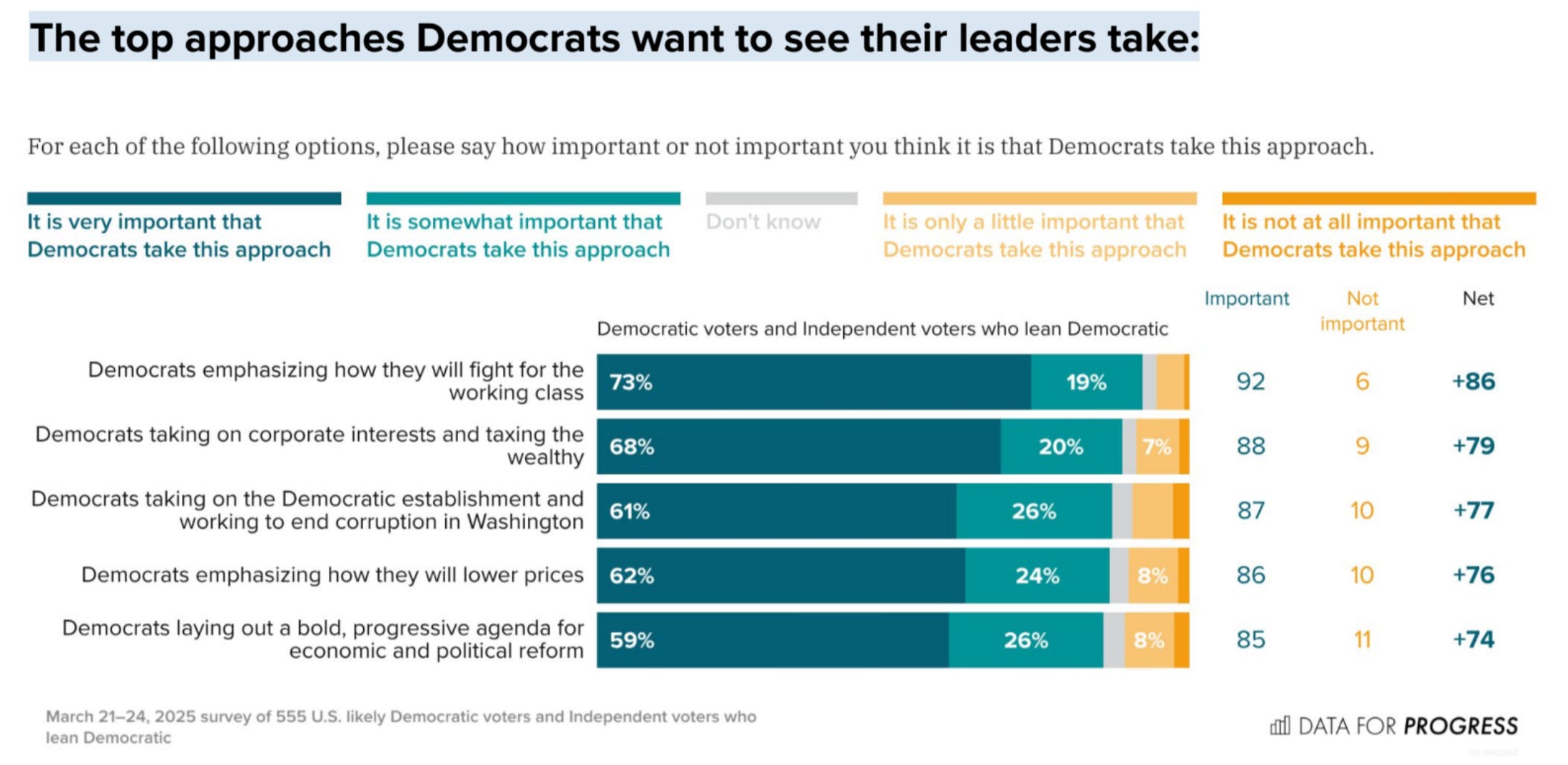
Ryan O’Donnell, the executive director of Data for Progress, presented excerpts from a fair number of polls conducted over the past four or five months. There was no love for AIPAC among respondents, but the most pressing issues to Democratic voters involved radical change in the halls of power and in the economy.
