

Welcome to a Tuesday edition of Progress Report.
It’s been eleven days since my last newsletter, which should be a good indicator of how my recovery from this latest open-heart surgery is going (in a word, it’s been a slog). Three high-risk surgeries in less than three years have left me pretty beat up, and while I’ll refuse to not recover, it’s just gonna take a while.
But that’s my problem, not yours, and I appreciate supporters too much to ask you to continue paying for a publication that isn’t doing much publishing at the moment. So, starting today, I’m temporarily pausing all paid subscriptions to Progress Report until I am ready to return to regular action. This means:
If you have a monthly subscription, you won’t be billed again until I’m back to consistent publishing;
If you’re an annual subscriber, your subscription will be extended to make up for the lost time, free of charge.
I’ll still publish when I can during this paid subscription hiatus — I actually have an interview for you below. You’re welcome to support that work via the newsletter’s GoFundMe, and every donation is very appreciated, but a subscription is a promise that I can’t consistently keep right now. In a nation run by scam artists and disappointments, I won’t be another one.

In other and better news, two stories that I’ve been covering for the last year have come to surprisingly satisfactory conclusions via the Supreme Court of all institutions.
First, SCOTUS re-affirmed that Missouri could not use its GOP-gerrymandered Congressional map this year, giving voters a chance to weigh in on the new districts via ballot initiative. The ruling by our beloved Judge Ginger K. Gooch really pissed off JD Vance.
Last night, the Supreme Court rejected the Trump administration’s attempt to weaponize the US Postal Service and disenfranchise tens of millions of voters. The scheme was blatantly unconstitutional, as I explained in this report back in May, but that didn’t stop Trump from throwing a fit over the loss.
Just don’t get complacent: this court is still way too friendly to fascists, so expanding and reforming the Supreme Court needs to be at the top of any to-do list for the next Democratic trifecta.

Generational change is nothing new to Jeremy Moss.
Winning a competitive Democratic primary in Michigan’s very blue 11th Congressional district all but stamped the 40-year-old lawmaker’s ticket to DC, where he will join a wave of millennial lawmakers finally remaking a chamber with a median age of 60. For Moss, the promotion to Congress represents the third time that he’ll enter an institution in need of new blood and new ideas.
In 2011, at the age of 28, he was elected to city council in Southfield, an inner-ring city about 20 minutes from Detroit. Moss describes the body he joined as a “council of elders,” with a roster that included a 93-year-old member who was at the time the oldest elected official in the state. The problems he tackled then, as the Great Recession hollowed out towns like his, now seem prescient: zoning changes that allowed for more mixed use construction, more walkable streets, expanding the local commuter college into a more substantial public university.
Barely 30 when he entered the state House, Moss, who is openly gay, pushed for LGBTQ+ protections in a pre-Obergefell world (he was later the first openly gay Senator) and started the gun violence prevention caucus. When he got to the state Senate, led the elections committee during a period of extreme small-d democratic turmoil. As he prepares to take over Rep. Haley Stevens’ seat in DC, Moss is both promising an aggressive approach to fighting Donald Trump and joining a caucus that moved further left than his own solid liberal record in the legislature.
I spoke with Moss last week and asked him all about that record, how he’s navigated the political shift, what it means to fight Trump, and the accidental brouhaha with Hasan Piker and Abdul El-Sayed that put his name in the headlines late last month. Below is an edited and condensed version of our conversation.
You’ve often been on the forefront of generational change. That’ll definitely be the case in Congress, so what did you learn from navigating older institutions in the legislature?
Moss: When I first came into the state legislature in 2014, not only was I advocating for the LGBTQ rights bill, but also on gun safety. School shootings really came to prominence when we were in elementary school and middle school; Virginia Tech happened when I was in college. I go to bars like Pulse Nightclub. I go to a synagogue like Tree of Life Synagogue.
When I came into the state House, me and a few other younger colleagues established our first-ever gun violence prevention caucus and we put forward solutions to mitigate these incredible challenges. It was not popular. It was not even popular in the Democratic Party when we put forward these ideas to reduce gun deaths and injuries.
But sadly, every successive prominent mass shooting made the case for our legislation to pass. So [in 2023] we passed the first gun safety bills in Michigan and they are working and they are saving lives today. So I think that’s why it is really important to ensure that younger voices are in these positions where we can actually tackle challenges and push away old thinking that has prevented some of this generational change from occurring.
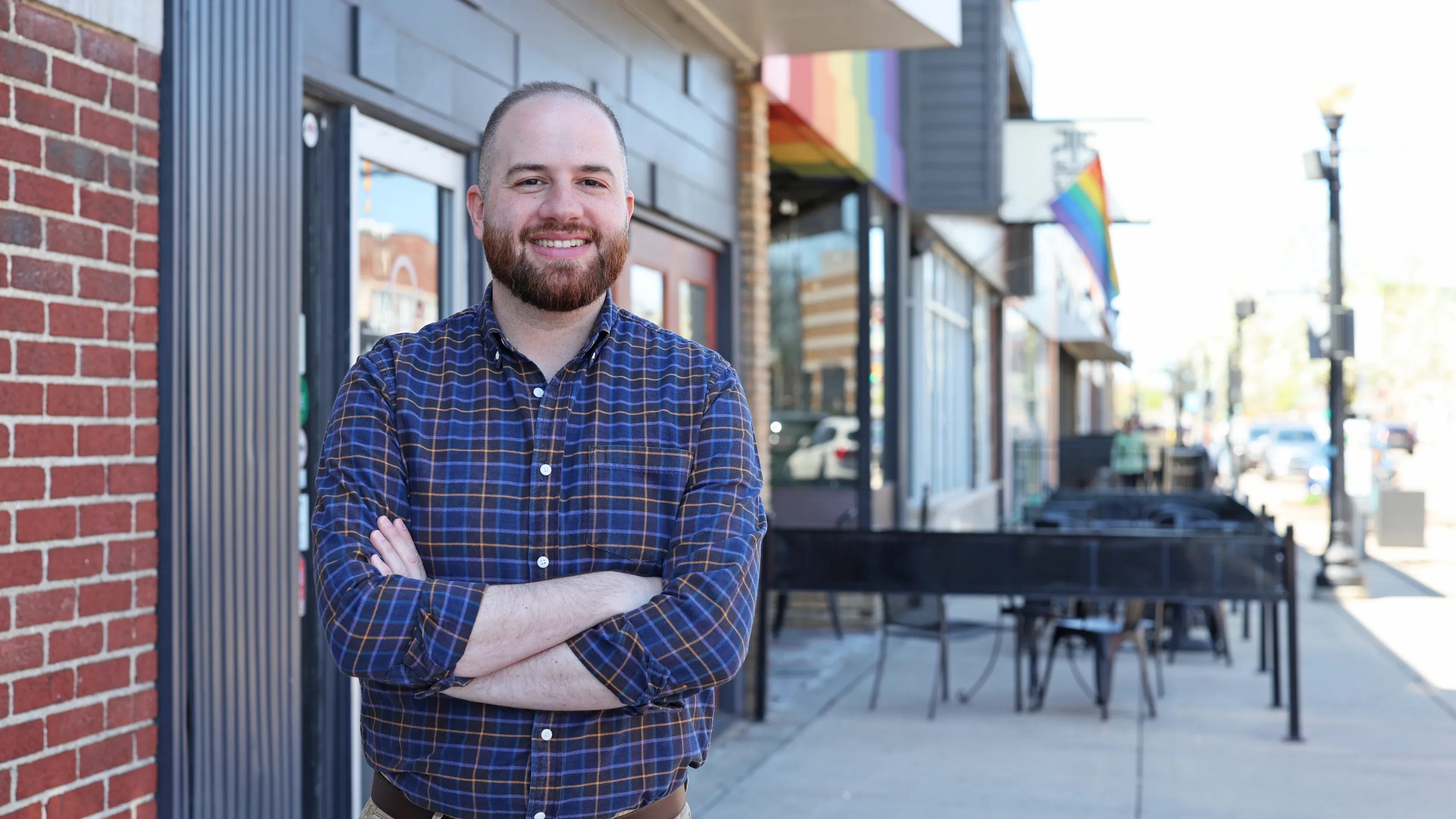
After years of Republican control, there was a lot for Democrats to do when they got a trifecta in 2023. But it was a very thin majority, and the House wasn’t as aggressive as the Senate, so looking back on it, are there things you wish you’d been able to get over the line?
We pushed forward on a lot of things, even with these thin majorities. We restored labor rights after they had been stripped away — we were the first state that repealed a “right-to-work” law in something like 60 years. We scrapped our 1931 abortion felony that was still on the books in a post-Roe v. Wade world. And one of the most important things that I was a big part of was as chair of the Elections Committee, defeating all of the Trump-driven election conspiracies and expanding access to the ballot and and reducing barriers to voting.
And there were a lot of conspiracies in Michigan in 2020.
We were one of the hot spots of COVID, then we were the hot spot for election conspiracies. First, they would protest the COVID orders with guns and then they would protest the election results with guns.
And then some of those protestors tried to kidnap the governor.
Exactly. So we ended up defeating these conspiracy theories. We elected a pro-democracy, pro-voter majority with that 2022 Democratic trifecta. I took helm of the elections committee and I wrote the law to increase access to absentee ballots, to implement nine full days of in-person early voting, and to respond to some of Donald Trump’s lies about our election and secure our election results while making it more accessible for citizens in our state to vote.
You’ve said that Democrats can no longer “bring a pie chart to a knife fight,” that they have to push back against Trump in a more aggressive way. A lot of Democrats have been saying things like that, so what does that actually mean to you? Let’s say you’re part of a Democratic majority in Congress, what are the priorities? Oversight? Investigations?
I think it’s both about the way we communicate and the things that we do. Donald Trump talks with brazen confidence about the things that he’s putting forward, whether it’s renaming the Gulf of Mexico or Lake Ontario, which I put in the stupid category; or the things that I put in the harmful category, like stripping away Medicaid and SNAP; or the things that I put in the dangerous category, the trampling over the rule of law, the going to war without Congressional authority. He talks about these things as if they’re incredibly popular.
We know the things that we’re pushing for — access to affordable health care, reducing costs, alleviating economic pain that people are feeling — we know that they’re popular, but we have to communicate what we’re doing with the same brazen confidence as Donald Trump. And we have to show the same gusto about our agenda and stop walking on eggshells and pulling punches and being afraid to communicate because it’s going to offend somebody. So that’s the type of Democratic Party and politics that I want to represent.
I think the most important thing we can do is pass the John Lewis Voting Rights Act in the wake of the Supreme Court stripping away the protections in the federal Voting Rights Act, in the face of Donald Trump trying to federalize elections and pass harmful legislation like the SAVE Act. Voting rights secure all of the rights.
You backed tax exemptions for data centers in 2024, and in Michigan, there is a lot of support for the projects from trade unions, which want the blue collar construction jobs. But the politics have shifted massively since then, with a huge backlash against data centers. What do you make of the change and how has that impacted your thinking?
We’ve begun that work here in Michigan. We passed some of the strongest environmental protections in the country. We’ve ensured that any data center being built here doesn’t burden rate-payers and utility bill payers with the cost. And I think those have to be our North Stars about anything dealing with data centers moving forward. Protecting our environment has to be a centerpiece to any policy that’s made, including protecting our water supply from any sort of erosion as these proposals come through our state.
I’m a big proponent of local control. I don’t think that these should pop up in any community where the backlash is strong and they don’t want it there. And I think those three components of protecting ratepayers, protecting our water, and ensuring local control have to be at the centerpiece of any conversation around data centers.
What do you make of the huge shift in public sentiment?
It’s almost like a Walmart rule. When I was on city council, there was a Walmart proposal, and the backlash was so strong. People didn’t want a big box store. They didn’t want to decimate local and small businesses, and they were concerned about labor rights of employees. When they don’t want a Walmart in it the community, it should be respected; same thing with data centers.
Last month, Hasan Piker played an audio clip that was purported to be you talking about your support for Israel. You said the clip was manipulated, maybe through AI. I’ll be honest, this happened a day after I had open-heart surgery, so I’m pretty foggy on the details. Can you walk me through what happened?
I’ll send you a Detroit News article that I think really encapsulated the whole timeline. I think they did a very good job, so you can cite that. But we are in the process of figuring out the path to unite this ticket.
It was a very intense Senate primary. We actually hadn’t had a Senate primary in the last 25 or 30 years here. So our party, for the very first time, had different choices to select a nominee. There’s a lot of work to do to unite this ticket and I am going to be somebody who is putting in the work to facilitate that so that we can all make sure all voices in our party are heard, that we can continue to operate a wide tent, and I’m committed to that work.
I want to ask about the AI of it all, because as a journalist, it’s sort of overwhelming. You want to authenticate everything, but things go viral and you have no idea whether it’s real or not and the story moves so quickly. It’s hard to track reality, which is especially tough in an election cycle.
That’s exactly right. We’ve begun the work in the state of Michigan to make sure that if there’s anything that’s AI in a campaign ad, it has to be disclosed. And we’re really trying to ensure that people can’t put out fake information. It’s an erosion of our democracy when disinformation is shared, whether it’s from the right or the left. And if it confirms your biases, it’s incredibly dangerous to click the share button without doing the due diligence to make sure you’re sharing accurate and truthful information.
Thirty years ago, people got the news from Tom Brokaw and Peter Jennings and Dan Rather. And then maybe about 15 years ago or more, we started to get the news from cable news with a political bent, whether it’s MSNBC or Fox News. Now people are getting their news with the scroll of their thumb on their iPhones and a 30-second clip can make its way around the internet before any truth or fact is asserted, so it’s our responsibility to get back to that era of trusted and accurate news sources when we share information that can go around the Internet in a flash.
I’ll also say this, one thing that I’m passionate about is the algorithm. The algorithm rewards outrage. It farms in outrage. I’m absolutely a proponent of our First Amendment and free speech. But when you scroll through your X feed, it is manipulated to reward outrage and to keep those things going. I think that’s something that this next Congress has to tackle, because it’s untenable for our politics to have disinformation that sparks outrage just be so free-flowing all across the internet.
I very much believe in free speech, but we’ve seen the algorithm develop and be weaponized by big corporations and billionaires. So when you’re in Congress, what can be done?
I’d like to see more disclosure of the tactics that are used in creating an algorithm that helps to perpetuate narratives that propel outrage. I think there’s a lot of work to be done in this space, and this could be some of the most consequential things that we’re able to tackle here.
We actually have begun some of this work in the state legislature. We have a piece of legislation that I've been very supportive of called Kids Over Clicks. It puts forward safeguards for kids online, limits the hours that they can utilize social media. It puts a limit to the endless scrolling. And it reduces some of these parts of the algorithm that can encourage harm to kids and promote violence and self-harm. So we have done the work here at the state legislature to protect not only our kids, but to add safeguards to what the algorithm can produce.
Wait, Before You Leave!
Progress Report has raised over $7 million dollars for progressive candidates and causes, breaks national stories about corrupt politicians, and delivers incisive analysis, and goes deep into the grassroots.
None of the money we’ve raised for candidates and causes goes to producing this newsletter or all of the related projects we put out. In fact, it costs me money to do this. So, I need your help.
You can make a one-time donation to Progress Report’s GoFundMe campaign!
Please rest up and take of yourself. You have been through so much.. My thoughts are with you. Consider yourself hugged.
Glad your feeling up to do an interview just be careful not to push too hard too soon we need more like you